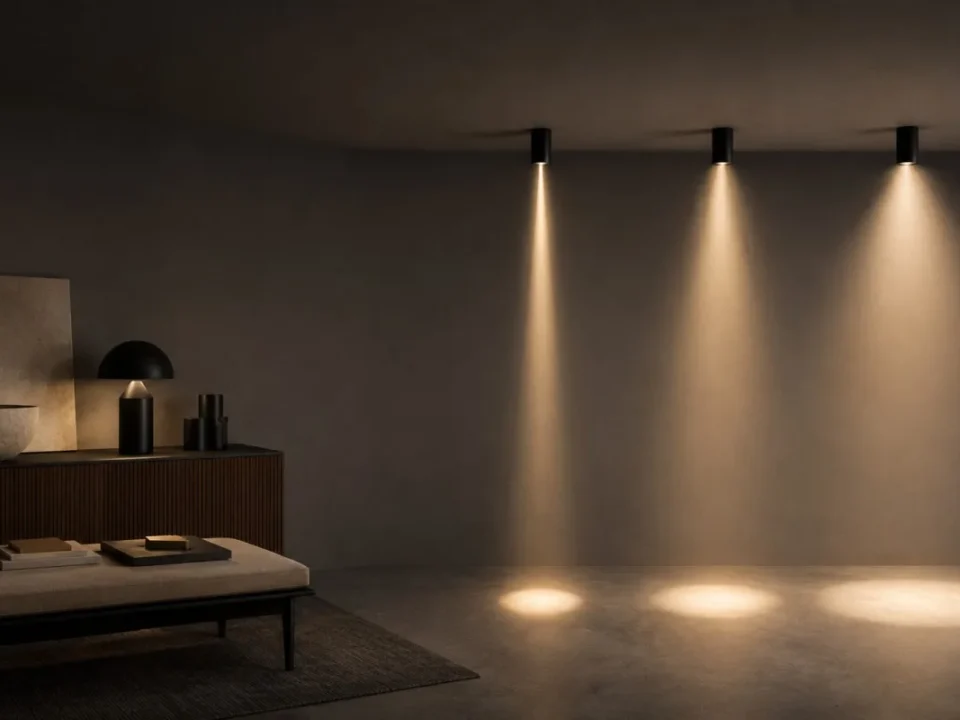
Light beam angle: how to choose the right one?
25. August 2026.
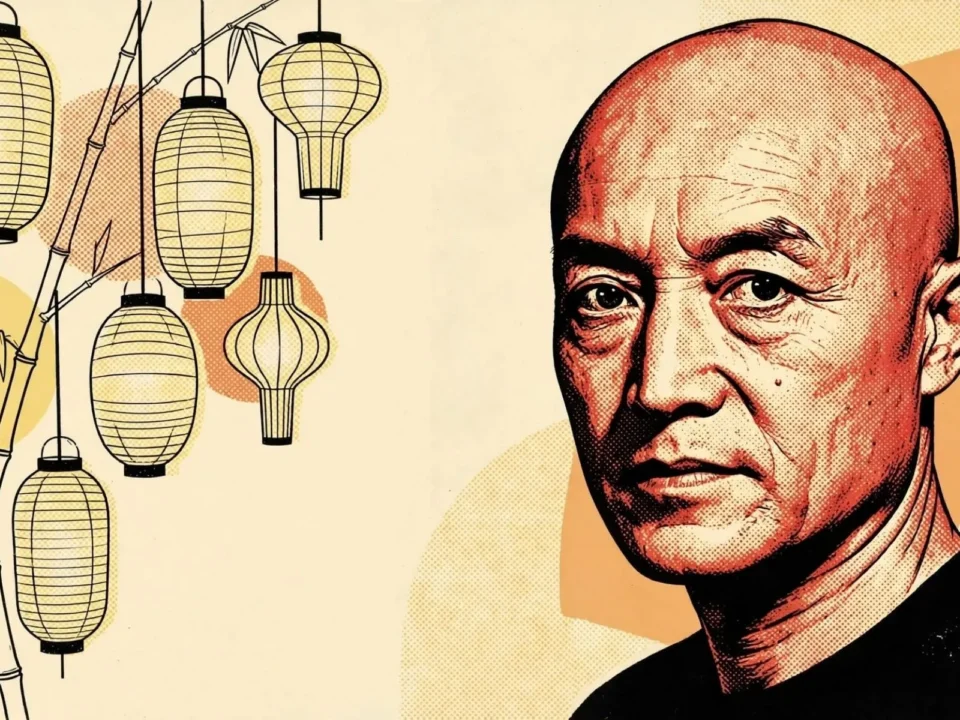
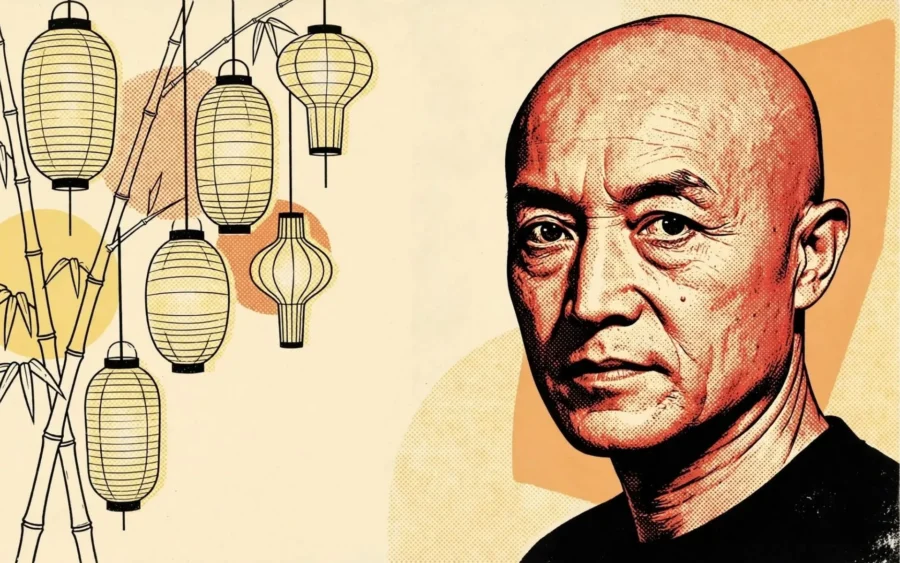
PORTRAIT OF AN ICON Isamu Noguchi, the sculptor who turned paper into light
1. September 2026.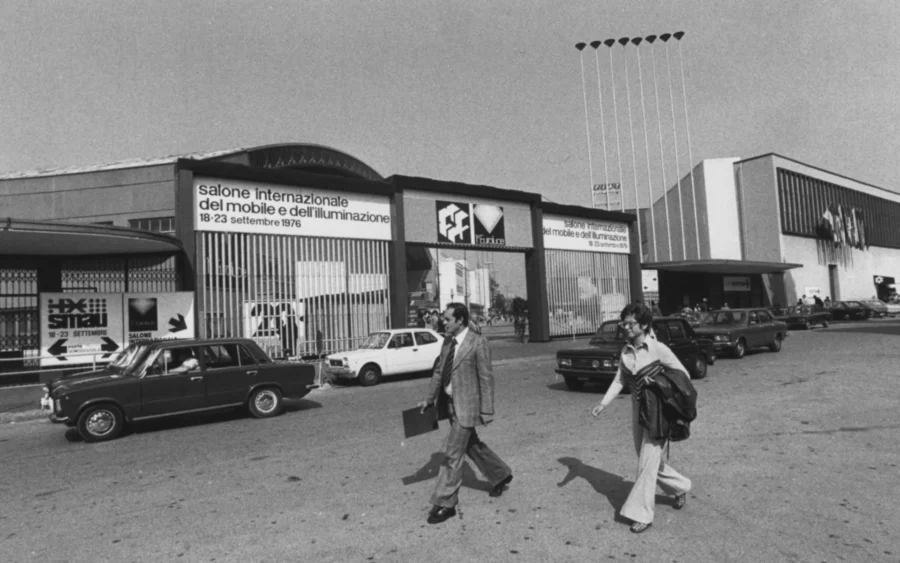
A LOOK INTO THE PAST The first Euroluce in 1976: when lighting got its own big stage
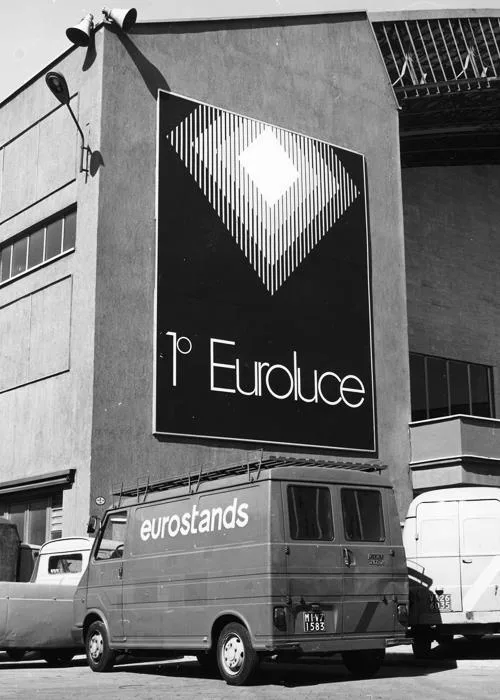
For decades, lamps were presented as part of furniture and interior design. They had an important function, but they were rarely given a space where their design, technology and production could be discussed at the same time. This began to change in 1976, when the first Euroluce, an international exhibition dedicated to lighting, was held in Milan.
In 2026, it will be 50 years since that first edition. Euroluce has since become one of the most important meeting places for manufacturers, designers, architects and lighting experts. Its history is therefore not just the story of a large trade fair. It shows how lighting has evolved from a product chosen at the end of a design to an independent field of design, research and industry.
The first Euroluce brought together 245 manufacturers
The first edition was held as part of the Milan Salone del Mobile from 18 to 23 September 1976. According to the historical archives of the Fondazione Fiera Milano , Euroluce was given an independent space in a pavilion. There, 245 Italian and foreign exhibitors presented their production in an environment specially designed to highlight the diversity of lighting design.
Today, this may sound like a mere trade fair statistic. However, the separate lighting pavilion sent an important message: the lamp was no longer just an accessory for a table, sofa or wardrobe. It had become a product that deserved its own professional and market stage.
Different parts of the same process could meet in one place:
- designers who explored new forms and ways of using light
- manufacturers who needed to turn ideas into a repeatable and safe product
- suppliers of materials and components
- architects and designers who installed lighting in the space
- buyers and distributors who brought new products to international markets
It is precisely this closeness of idea, production and application that helped lighting become an equal part of design culture.
Why Italy has become the center of lighting design
Euroluce did not emerge in a vacuum. The 1960s and 1970s were a period of intense experimentation. Designers were moving away from the strictly functional modern lamp composed of a light source, wire, bracket and base. They began to explore plastics, synthetic fibers, new types of glass and other solutions that allowed for larger, softer and more sculptural forms.
The Museum of Modern Art in New York points out that Italy became a leader in international lighting design during this period partly because of the structure of its production. Smaller, artisan-based factories were able to control quality, but also react quickly enough to designers’ suggestions.
This is an important distinction. A good sketch alone does not make a good lamp. You need to find a material that can be shaped, a joint that remains stable, a diffuser that gives the desired character of the light, and a construction that can be produced repeatedly without loss of quality. The Italian blend of design ambition and manufacturing adaptability created an environment in which unusual ideas could become real products .
Euroluce gave such manufacturers international visibility, and visitors the opportunity to compare different approaches to form, material and light in one place.
From lamp as object to light as system
The first edition focused on presenting production and design diversity. Over the following decades, the source technology changed, as did the questions designers asked.
In the past, the starting point was mostly: how to design a lamp? Today, the question is increasingly being asked: what kind of light does a space and the person who uses it need?
The modern Euroluce therefore encompasses more than just decorative lamps. The official description of the exhibition includes indoor, outdoor, industrial, stage and hospital lighting, special purposes, light sources, control systems and software. Sustainability, digitalization, quality of life and the influence of light on perception, behavior and mood are also in focus. Euroluce – Salone del Mobile. Milan
| Eurolights 1976. | Euroluce today |
|---|---|
| The first edition of the international lighting exhibition | One of the most important biennial exhibitions of lighting design |
| 245 Italian and foreign exhibitors | More than 300 international exhibitors |
| Independent space in one pavilion | Multiple pavilions, exhibitions, installations and an expert forum |
| Emphasis on products and design diversity | Design, technology, sustainability, digitization and human well-being |
| Lamp as a single product | Light as part of architecture and a connected system |
The change is also clearly visible on the example of the edition from 2025. At that time, 306 exhibitors participated, of which 45 percent were from outside Italy. Along with new products, material research, modularity, circular approaches, advanced LED sources and reinterpretations of historical models were presented. The first Euroluce International Lighting Forum was also launched, expanding the discussion about light beyond the limits of technology itself. Euroluce 2025 overview.
What the first 50 years of Euroluce tell manufacturers today
Half a century after the first edition, the tools are different, but the relationship between design and production remains crucial. Computer modeling, LED technology and digital control have opened up possibilities that did not exist in 1976. However, every product still has to go from idea to workable detail.
Four lasting lessons can be drawn from the history of Euroluce:
- New technology is only valuable when it improves the experience of light. A smaller source or smarter management are not ends in themselves.
- The material affects both the appearance and the lighting effect. Metal, glass, textiles and polymers determine not only the form but also diffusion, reflection and atmosphere.
- The designer and manufacturer need to talk from the beginning. The best solutions are created when form, construction, service and production develop together.
- Fairs are not just sales points. They speed up the exchange of knowledge and show in which direction the needs of the space, users and industry are moving.
A big stage for ideas that must work
The first Euroluce in 1976 did not change the world of lighting in one fell swoop. But it gave lighting a clearly recognizable place within the international design and manufacturing scene. It showed that a lamp can be simultaneously a technical product, a designed object, and a tool that changes the experience of space.
Today, when the light source can be almost hidden and the control linked to the entire building, this idea is even more important. Technology opens up possibilities, but quality only comes when the designer’s intention, knowledge of light and manufacturing experience come together. It is in this combination that the real value of Euroluce – and of every well-designed lamp – has been found for fifty years.
We are happy to answer all your questions!
Use the form below and ask anything you want to know.
If you need an official offer, choose: company