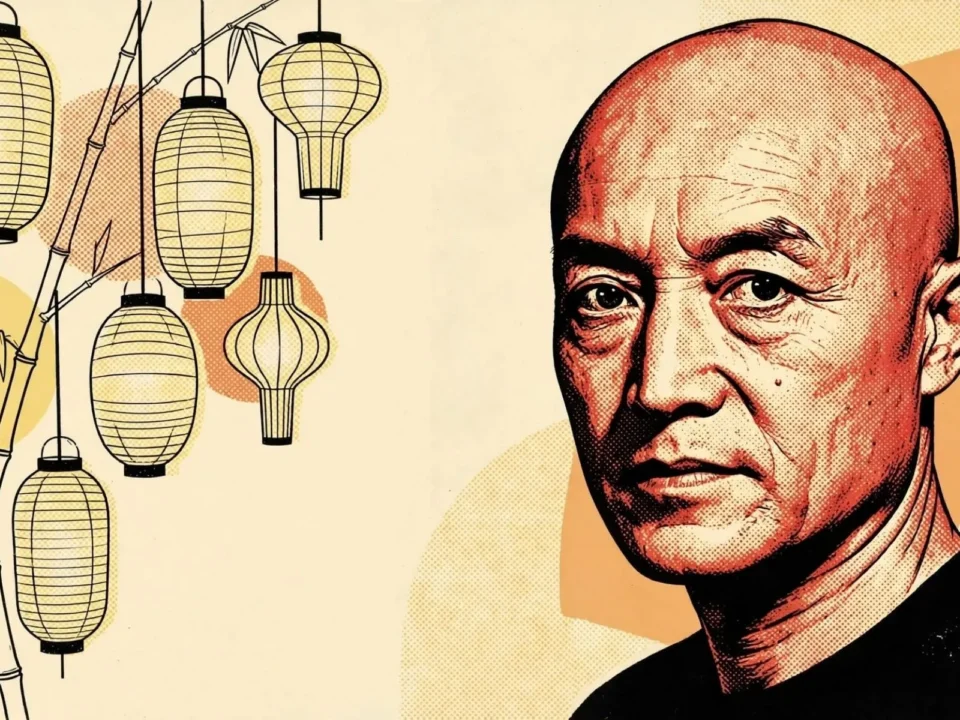
PORTRAIT OF AN ICON Poul Henningsen, the man who shaped the way we see light
14. April 2026.
Why does a new light bulb never look the same as an old one, even though it says 3000K?
28. April 2026.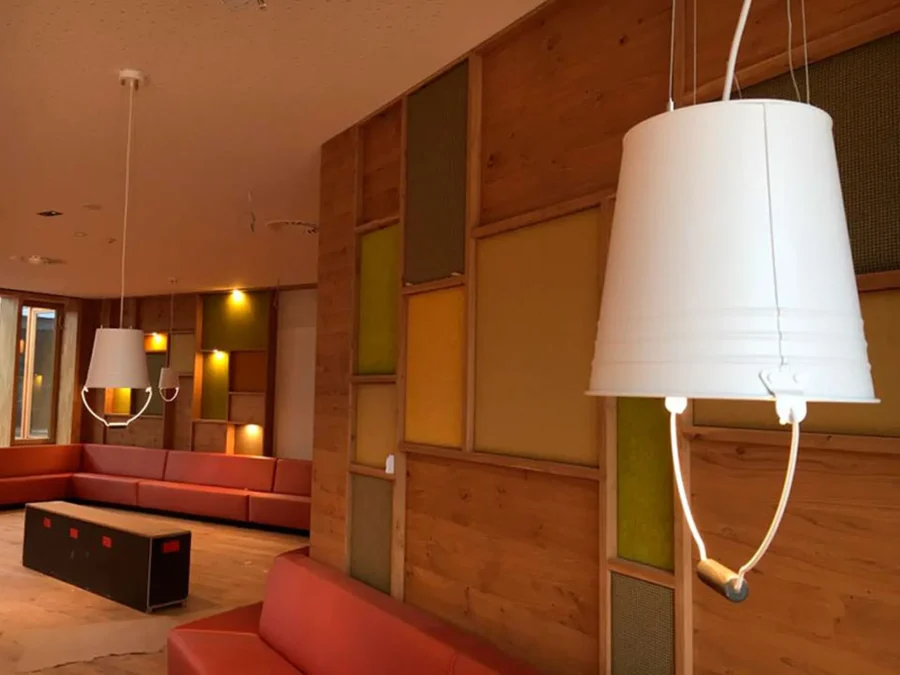
How we turned milk crates into lamps for a high-end hotel
When we talk about custom lighting, we often think of expensive materials, clean lines, and precise production. But sometimes the best projects come from something completely ordinary. That was exactly our work on the Dachsteinkönig – Leading Family Hotel & Resort project, where we were tasked with designing lighting that would not only be functional, but also tell the story of the space. It was clear from the beginning that standard solutions were out of the question here. We needed something authentic, something that the guest would feel, not just see.
The hotel owner had a clear idea. The lighting had to reflect the local tradition, the life of people who had lived off the land and livestock for generations. In this context, one object stood out, the milk bucket. Once an everyday tool, today an almost forgotten symbol of a way of life. The idea was simple on paper, but in practice, anything but simple. Transforming such an object into a functional and safe pendant lamp requires much more than good design.
From idea to realization
The first problem was very specific. Where to find enough milk cans that are in good condition to be used? We weren’t making one lamp for a showroom, but an entire lighting system for a hotel. That means quantity, but also consistent quality. In practice, we came across all sorts of things. The cans were rusty, dented, and deformed. Most of them had been used to the limit, which is logical; they were work tools, not decoration.
This is where the real work begins. Each bucket had to be inspected, cleaned, and assessed for any potential for further use. Those that had potential went through a restoration process. Metal straightening, rust removal, and surface preparation. This was followed by processing, plastic coating, and protection to meet the standards that professional lighting must have. There is no compromise when it comes to safety and durability, no matter how “rustic” the initial material was.
When an object gets a new life
The result was more than just a lamp. Each lamp bore traces of its previous life. Small irregularities, slight differences in shape, everything that industrial production tries to eliminate, became an advantage here. It was precisely these “imperfections” that gave the space character. The guest doesn’t just see light, they see a story. And that’s what distinguishes ordinary lighting from lighting that stays in the memory. It was a great example of upcycling, a trend that is increasingly gaining momentum in design, and which came naturally to us a few years ago.
This project was one of those that remind you why you do this job in the first place. It wasn’t the easiest, nor the fastest. But it was one of the most interesting. It showed that lighting design doesn’t start in a workshop, but in understanding the space, the people, and their history. Everything else, in the end, is just execution.
We are happy to answer all your questions!
Use the form below and ask anything you want to know.
If you need an official offer, choose: company