Sculptural lighting for a technological premium space
9. December 2025.
What light temperature is recommended for catering and which for home?
13. January 2026.
A LOOK INTO THE PAST
Textile blinds before industrial production
Today, lighting is often discussed in terms of technology, source power, and efficiency. But centuries before industrial production, light was not “chosen” but made. At the heart of this process were textile shades, born from the need to tame, soften, and adapt flame to the space in which people live, pray, and work. The keyword then was not design, but a sense of material and an understanding of light.
Light before factories: linen, silk, and parchment
In the era before mass production, lampshades were not standardized. They were made by hand, often in households or small workshops. The most common materials were linen, cotton, silk, and parchment. They were chosen for their availability, but also for the way they transmitted light. Linen gave a diffuse, calm light, silk brought warmth and a soft glow, while parchment created a more solid, almost ceremonial atmosphere.
Textile shades were not just used to protect the flame of a candle or oil lamp. They shaped space. In churches, they emphasized the sanctuary, in homes, they created intimate zones, and in castles and palaces, they clearly showed social hierarchy. The light was weaker than today, but it was thoughtful. Every fabric, every shade, and every fold had its purpose.
It is important to emphasize that at that time there was no division into functional and decorative lighting. Textile shades were both. Functional because they protected the light source and the eyes, decorative because they were part of the interior, just like curtains, tapestries, or clothing.
Why textiles always come back to lighting
With the advent of industrial production and new light sources, textiles were temporarily supplanted. Metal, glass, and later plastic offered control, durability, and speed of production. But textile shades never went away. The reason is simple. No material softens light like fabric.
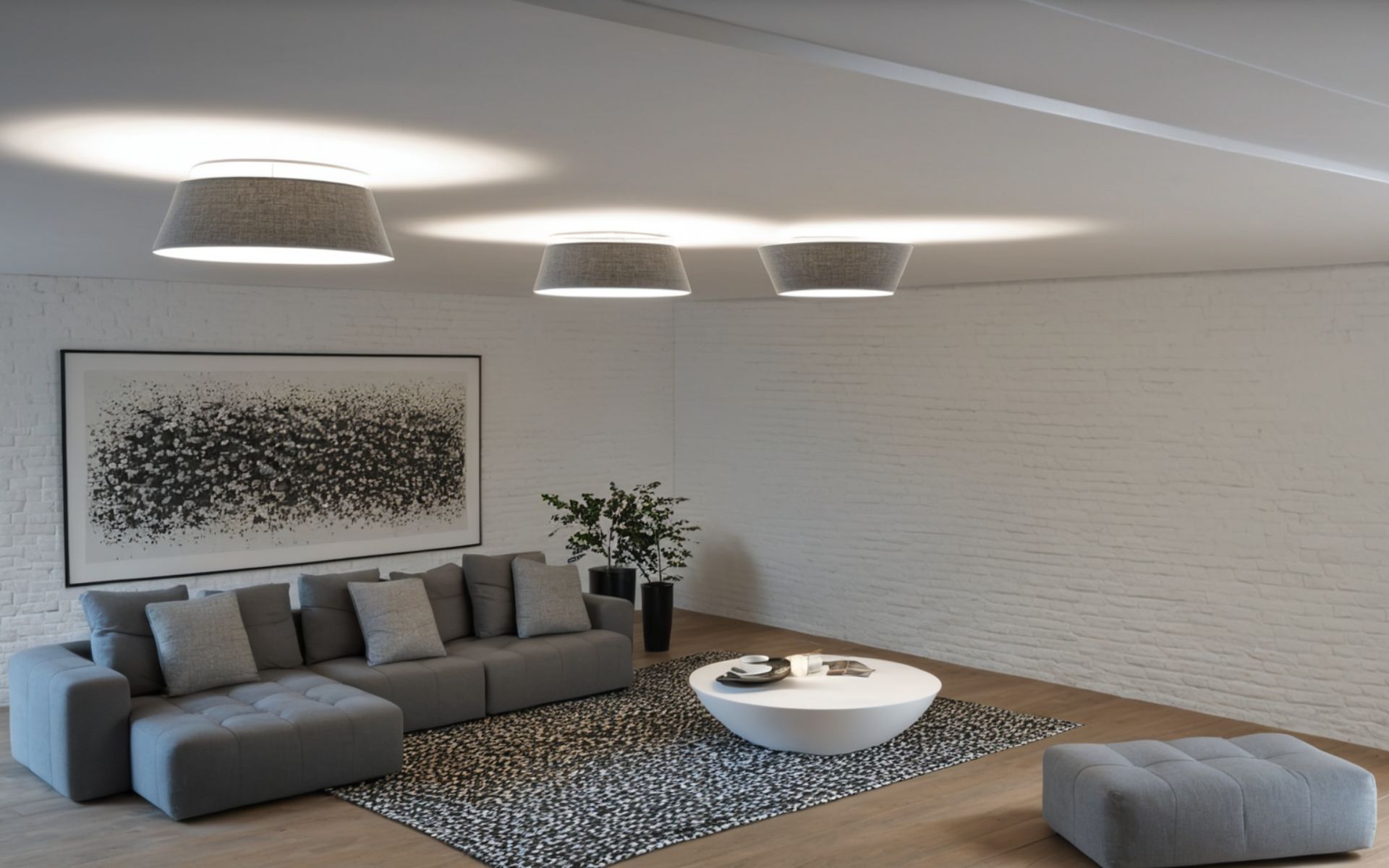
Textiles have the ability to diffuse light without killing it. They retain the warmth of the source, reduce contrasts, and give a space a feeling of comfort. This is why textile shades always make a comeback when interiors become too cold, too technical, or visually overwhelming.
Today, when we have powerful LED sources and complete control over light, textiles are gaining importance again. Not as a nostalgic accessory, but as a conscious choice. Using fabric in lighting means slowing down, thinking, and giving character to a space.
A look into the past clearly shows that textile shades are not a trend, but a continuity. They are a bridge between craft and technology, between man and light. And that is precisely why they still have their place today, perhaps more than ever.
We are happy to answer all your questions!
Use the form below and ask anything you want to know.
If you need an official offer, choose: company
A LOOK INTO THE PAST
Textile blinds before industrial production
Today, lighting is often discussed in terms of technology, source power, and efficiency. But centuries before industrial production, light was not “chosen” but made. At the heart of this process were textile shades, born from the need to tame, soften, and adapt flame to the space in which people live, pray, and work. The keyword then was not design, but a sense of material and an understanding of light.
Light before factories: linen, silk, and parchment
In the era before mass production, lampshades were not standardized. They were made by hand, often in households or small workshops. The most common materials were linen, cotton, silk, and parchment. They were chosen for their availability, but also for the way they transmitted light. Linen gave a diffuse, calm light, silk brought warmth and a soft glow, while parchment created a more solid, almost ceremonial atmosphere.
Textile shades were not just used to protect the flame of a candle or oil lamp. They shaped space. In churches, they emphasized the sanctuary, in homes, they created intimate zones, and in castles and palaces, they clearly showed social hierarchy. The light was weaker than today, but it was thoughtful. Every fabric, every shade, and every fold had its purpose.
It is important to emphasize that at that time there was no division into functional and decorative lighting. Textile shades were both. Functional because they protected the light source and the eyes, decorative because they were part of the interior, just like curtains, tapestries, or clothing.
Why textiles always come back to lighting
With the advent of industrial production and new light sources, textiles were temporarily supplanted. Metal, glass, and later plastic offered control, durability, and speed of production. But textile shades never went away. The reason is simple. No material softens light like fabric.
Textiles have the ability to diffuse light without killing it. They retain the warmth of the source, reduce contrasts, and give a space a feeling of comfort. This is why textile shades always make a comeback when interiors become too cold, too technical, or visually overwhelming.
Today, when we have powerful LED sources and complete control over light, textiles are gaining importance again. Not as a nostalgic accessory, but as a conscious choice. Using fabric in lighting means slowing down, thinking, and giving character to a space.
A look into the past clearly shows that textile shades are not a trend, but a continuity. They are a bridge between craft and technology, between man and light. And that is precisely why they still have their place today, perhaps more than ever.