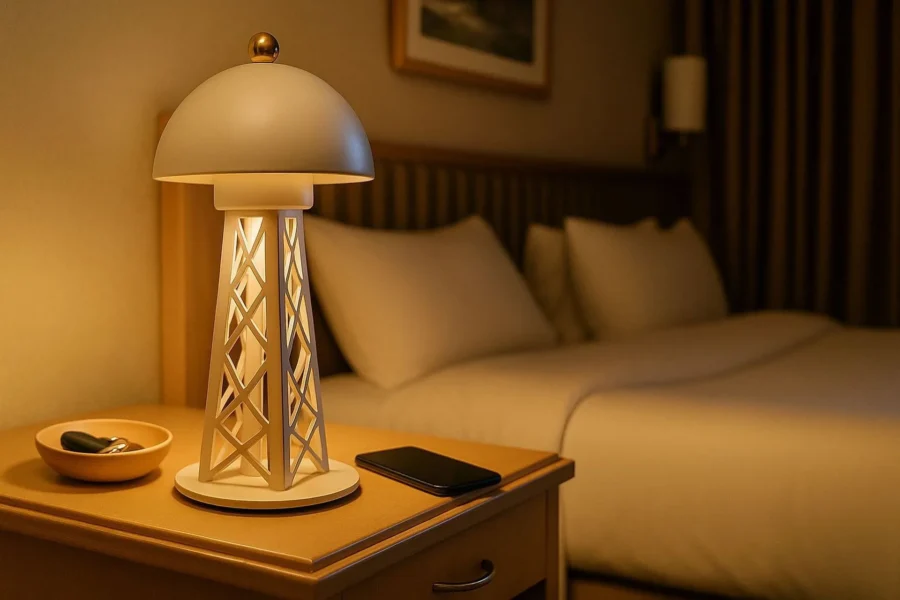
A LOOK INTO THE PAST How bedside lamps in hotels came about
10. March 2026.
From LED strips to dramatic chandeliers: a guide to hotel lighting by zone
13. March 2026.
Layered lighting in the living room answers the questions that bother you
Layered lighting is the foundation of a well-designed interior. A single central light source can meet basic functional needs, but it cannot provide visual depth, atmospheric control, and proper accentuation of space. Professional lighting design combines general, accent, and ambient lighting. Each layer has a clearly defined function and measurable technical parameters.
Below, we provide specific guidelines for designing a living room of approximately 20 m², with recommendations for lumens, color temperature, and lighting arrangement.
1. General lighting: basic level of illumination
General lighting ensures uniform illumination of the space and enables safe movement. The most commonly used type is recessed ceiling lighting, or downlights.
How much light is needed?
For the living room, the recommended lighting level is 150 to 300 lux.
For a 20 m² space, this means a total of approximately 3,000 to 6,000 lumens.
Example of calculation:
20 m² × 200 lux = 4000 lumens total.
If one downlight provides 600 to 800 lumens, such a space requires 5 to 7 pieces, depending on the layout and ceiling height.
Downlight arrangement
Downlights should not be placed in the middle of the ceiling without regard to furniture. The arrangement should follow the zones of use. The light should fall in front of the seated person, not directly behind their head, as this creates shadows on the face.
The recommended distance from the wall is 50 to 80 cm, depending on the radiation angle. For a wider angle (60 to 90 degrees), the distance may be greater.
Color temperature
For a living room, 2700 K to 3000 K is recommended.
A warmer temperature creates a more comfortable ambiance. A more neutral light of 3500 K can be used in more modern interiors, but it should be coordinated with the materials.
2. Central lamp: visual focus
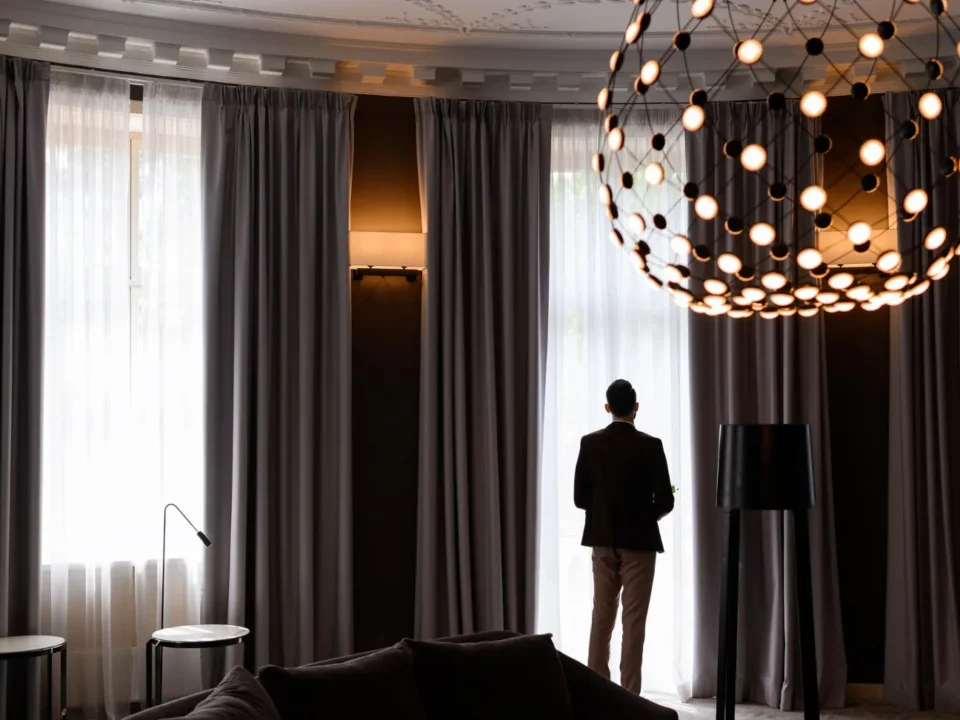
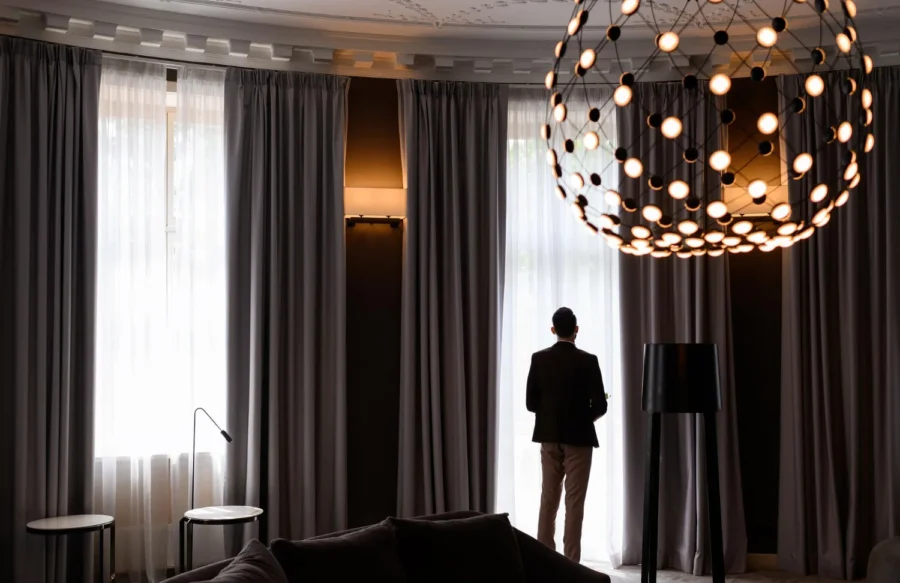
A chandelier or pendant light doesn’t just have a decorative role. It defines the center of a space.
If placed above a dining table, the lower edge of the lamp should be 70 to 80 cm above the table surface. This ensures good lighting without glare.
When installed in a living area without a table, the height depends on the total height of the ceiling. In rooms with a height of 260 cm, the pendant is most often lowered 30 to 50 cm from the ceiling.
The lumen output of the central luminaire should be included in the overall calculation of the space’s illumination.
3. Accent lighting: highlighting elements
Accent lighting is used to highlight details. These can be paintings, relief walls, shelves, or architectural elements.
To emphasize the image, a directional spot with a beam angle of 24 to 36 degrees is used. The intensity of the accent lighting should be at least three times stronger than the general level of illumination for the effect to be visible.
Example:
If the general lighting is 200 lux, the accent should provide around 600 lux on the highlighted surface.
Spot lighting can be ceiling or wall-mounted, depending on the concept of the space.
4. Wall, table and floor lamps: ambient level
Ambient lighting allows for flexibility and adaptation of the space to different scenarios.
Wall lamps soften contrasts and add vertical dynamics to the space. Their lumen output is usually between 300 and 600 lumens per piece.
Desk lamps in the work area should provide 300 to 500 lux on the work surface. This usually means 500 to 800 lumens, with a directional beam.
Floor lamps with sets usually have 800 to 1200 lumens, but with a diffuser that softens the light.
All light sources must have compatible color temperatures. Mixing 2700K and 4000K in the same room often creates a visual mismatch.
5. Most common lighting planning mistakes
- Lighting design before defining furniture.
The arrangement of lamps must follow the actual zones of use. - Too many downlights.
Too much general lighting creates a cold and uncomfortable space. - Absence of ambient lighting.
Ceiling lighting alone does not provide an evening atmosphere. - Mixing different color temperatures.
This creates an impression of dissonance and technical disconnection. - Neglecting dimers.
The ability to regulate intensity is key to space flexibility.
Layered lighting requires a technical approach and precise planning. It is necessary to calculate the total lumen, define the usage zones, and match the color temperature. The combination of general, accent, and ambient lighting enables control over the functionality and atmosphere of the space.
Professionally designed lighting is not based on aesthetic intuition, but on measurable parameters and clear spatial logic.
We are happy to answer all your questions!
Use the form below and ask anything you want to know.
If you need an official offer, choose: company