What have we learned from working with hoteliers? What are the most common lighting issues that plague them?
24. February 2026.
Layered lighting in the living room, answers to the questions that bother you
13. March 2026.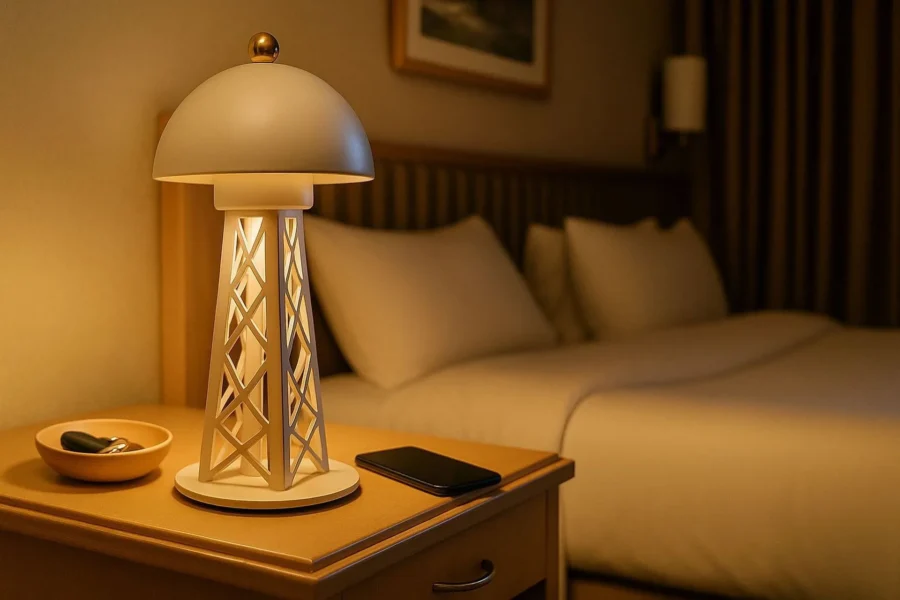
A LOOK INTO THE PAST
How bedside lamps in hotels came about
In the first modern hotels in the late 19th and early 20th centuries, room lighting was very simple. Most often, there was only one lamp on the ceiling or a wall lamp. Electric lighting was a novelty, and the very fact that a room had electric light was considered a luxury.
This solution was not particularly practical. A guest who wanted to read or get out of bed in the evening had to get up and go to the switch on the wall. The light illuminated the entire room, which was inconvenient if there were several people sleeping in the room.
At that time, bedside tables often had candles or small oil lamps. Only later did electric table lamps begin to take over these functions. With the development of electrical installations in hotels at the beginning of the 20th century, the first table lamps appeared that provided local lighting. A guest no longer had to light up the entire room to read a few pages of a book or find a glass of water in the middle of the night.
When reading in bed becomes the norm
In the early 20th century, especially between the two world wars, hotel design began to focus more on guest comfort. Reading in bed became a common habit, and interior designers began to introduce smaller, local sources of light.
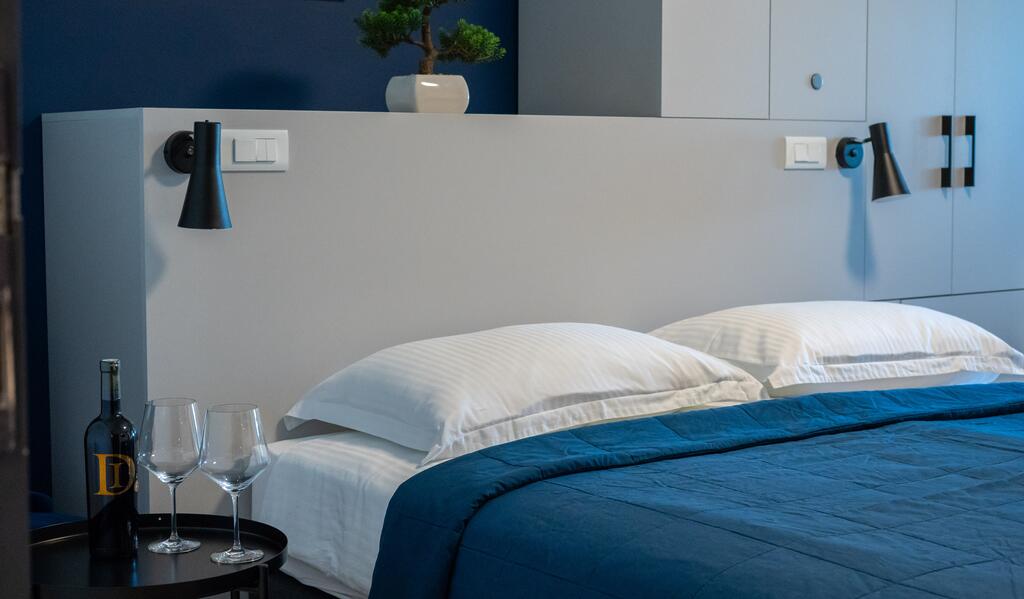
This is how bedside lamps or wall lamps appear at the head of the bed. They provide directional light that does not disturb the other person in the room. This is also the beginning of what we now call layered lighting. One central light is no longer enough. The room has multiple light sources that have different functions.
By the mid-20th century, such lamps had become standard in most hotels. Along with overhead lighting and ambient light sources, bedside lamps became a key element of every room. They gave the guest a sense of control over the space. They could read, work, or prepare for sleep without illuminating the entire room.
Nowadays, such lamps are often integrated into the headboard of the bed, have their own switches, dimmers or even USB ports for charging devices. But the idea remains the same. A small light source next to the bed was created to make staying in a hotel room more comfortable and convenient.
The most famous table lamps
The development of table lamps did not only take place in hotels. Great lighting designers throughout the 20th century created models that became design icons and were often used in hotel interiors.
One of the pioneers was Christian Dell, a designer associated with the Bauhaus movement, whose Kaiser Idell lamp (1931) became a symbol of functional industrial design. The Bestlite BL1 from 1930, designed by Robert Dudley Best, had a similar influence. That lamp, interestingly, was also a favorite in British offices, so Winston Churchill also used it.
Later, famous Italian designers also came along. Achille and Pier Giacomo Castiglioni created some of the most famous lamps of the 20th century, such as the Taccio or Snoopy lamps, which often appeared in luxurious interiors. More recently, the Atollo lamp, designed in 1977 by Vico Magistretti for Oluce, has also gained great popularity. Its distinctive geometric shape has become one of the symbols of modern lighting design.
Such models have shown that a table lamp can be much more than just a source of light. It can also become a design element of a space. This is why hotel rooms often seek a balance between functionality and aesthetics. A lamp must be practical for reading and use, but also contribute to the character of the interior.
Over the decades, the small bedside lamp has gone from a simple practical solution to one of the key elements of the hotel room atmosphere.
Lamps that have become the identity of rooms
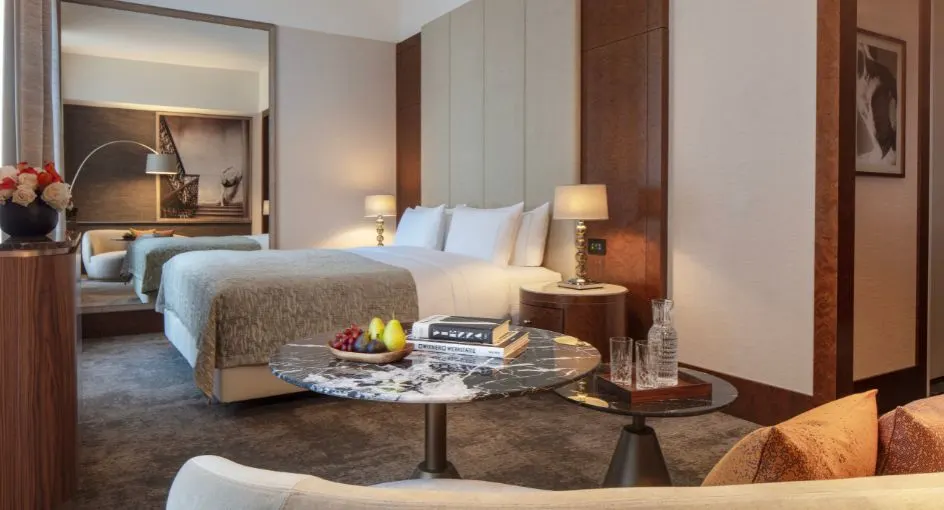
In some hotels, lighting is not just a functional element, but part of the recognizable identity of the space. Interior designers often choose or specifically develop lamps that become the visual signature of the hotel room. The guest may not know the designer’s name, but they will remember the atmosphere created by the bedside lighting.
One famous example is the boutique hotels developed by Ian Schrager, where lighting plays a key role in creating an intimate ambiance. Designer Philippe Starck has used distinctive table lamps and decorative lighting in many of his hotel projects to give the space character. In some hotels, lamps are even designed specifically for the project and cannot be found in standard retail stores.
This practice is especially present in luxury hotels and designer hotels, where attention is paid to every detail of the room. The table lamp next to the bed is then no longer just a source of light for reading. It becomes part of the scenography of the space. It is through such elements that the hotel creates an atmosphere that the guest remembers even after leaving.
We are happy to answer all your questions!
Use the form below and ask anything you want to know.
If you need an official offer, choose: company